

So you’re looking up the difference between simulated and moissanite? Here’s the simple deal: simulants are just materials that mimic diamonds but don’t have their qualities, while moissanite is its own gemstone with unique sparkle and toughness. Getting this difference straight matters a lot when you’re buying jewelry.
Here’s what we’ll cover
1. What Is Each Stone?
Simulants: The Imposters
Simulated diamonds include cubic zirconia, white sapphire, and glass, among others.These materials replicate diamond’s appearance but differ in hardness, refraction, and weight.For example, cubic zirconia has a hardness of 8.5 on Mohs scale, while diamond scores a 10.
Many buyers ask Is cubic zirconia durable enough for daily wear?The answer is mostly no—it scratches and loses shine over time.
Best diamond simulant for engagement rings. While simulants are budget-friendly, they often lack the fire and durability of other options. Consider a user asking Will my simulated diamond turn yellow? Some simulants, like low-grade CZ, may discolor after years of wear.

Moissanite: The Brilliant Alternative
Moissanite is a silicon carbide crystal with a hardness of 9.25, making it very scratch-resistant. Its refractive index (2.65-2.69) exceeds diamond’s (2.42), giving it a unique rainbow sparkle. A typical query is Does moissanite look fake? It looks real but has more fire—some love it, others prefer diamond’s subtlety.
Another frequent search: Moissanite vs diamond price difference. Moissanite costs about 5-10% of a diamond, making it a popular alternative. Users often wonder Is moissanite ethical? Yes, it’s lab-created, avoiding mining conflicts.

2. Simulated vs Moissanite: Key Differences
Hardness and Durability
For durability, moissanite takes the win: it’s a 9.25 on the Mohs scale, while simulants like cubic zirconia are only 8.5. If someone’s wondering which lasts longer—moissanite or a simulated diamond—the answer is clear: moissanite can stick around for decades, but simulants might need swapping out. For everyday use, you’re better off with moissanite.
Folks also ask, can simulated diamonds break easily? Yeah, especially if you knock them—cracks happen a lot. Moissanite is a lot tougher because of how its crystals are built. A typical search is, how do you test moissanite vs cubic zirconia at home? You can use a diamond tester—moissanite conducts heat in a different way.
Sparkle and Appearance
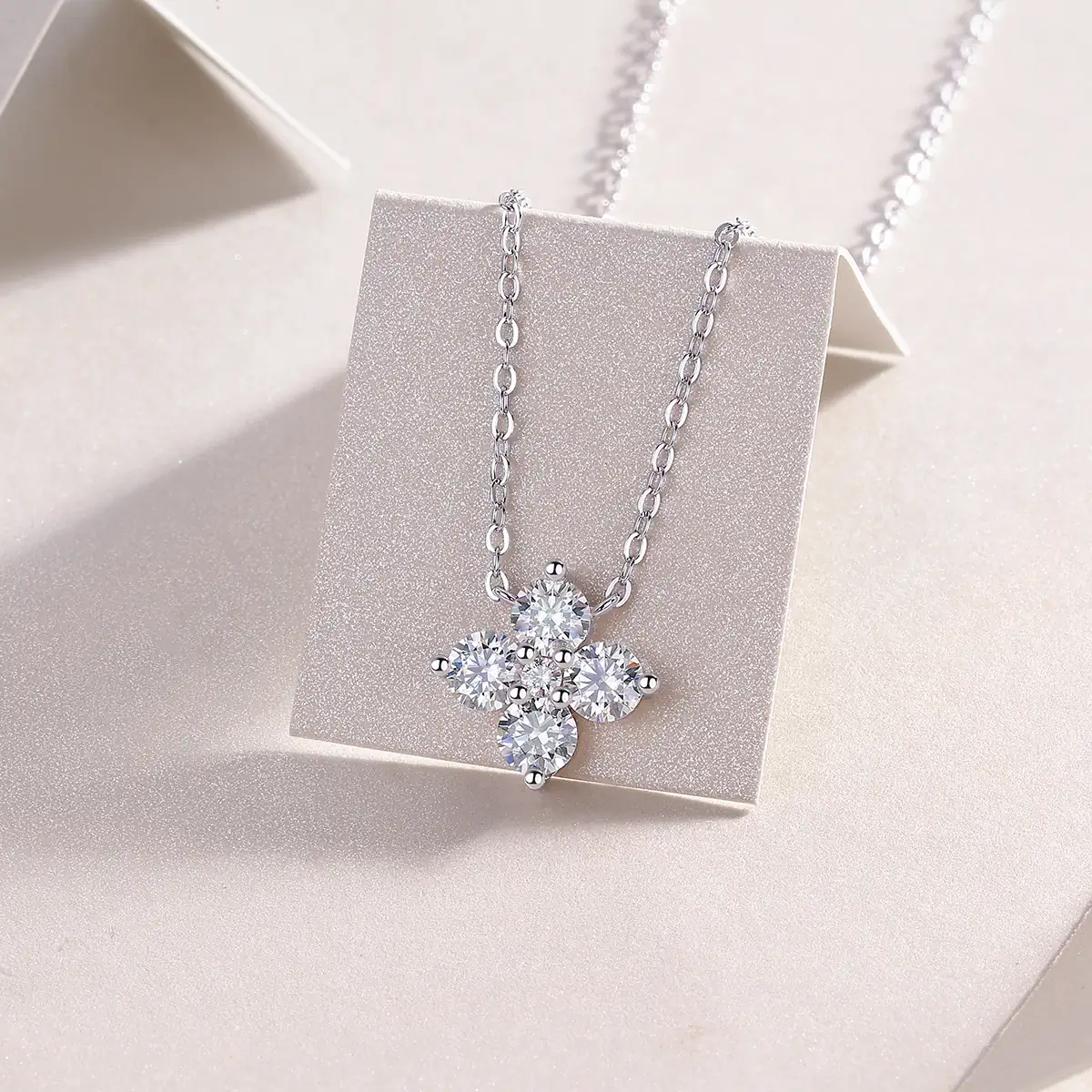
Moissanite gives off a rainbow effect with lots of colorful flashes, but simulants usually copy the white sparkle of a diamond. So which one looks more like a real diamond? Simulants like CZ are closer to a diamond in how they look, but moissanite’s fire can give it away. Some people actually like that unique look.
A common question people ask is, is moissanite too sparkly? For some folks, yeah, it is—it really comes down to personal taste. Simulants are more subtle but they aren’t as brilliant. Shoppers compare the sparkle of moissanite and diamonds to make up their minds.

3. Which Is Better for Engagements?
Budget and Value
For tight budgets, moissanite gives great value: a 1-carat equivalent costs $400-600, while a simulated diamond (CZ) costs $20-50. But resale value? Moissanite retains some value; simulants are nearly worthless. A user asks Is moissanite a good investment? Not as an asset, but as a beautiful stone.
Another search: Best moissanite for engagement rings under $500. Options include brands like Charles Colvard. Simulants are cheaper but less durable—you might replace them.

Ethical and Environmental Concerns
Moissanite is lab-grown, conflict-free, and sustainable. Simulants can be either mined or synthetic, but questions like Is cubic zirconia ethical? often lead to confusion. Both are generally ethical, but moissanite is marketed as eco-friendly.
A user might ask Are moissanite diamonds real? No, but they are real gemstones. Simulants are not diamond either. The choice depends on values: ethics, price, or appearance.
| Feature | Simulated (CZ) | Moissanite |
|---|---|---|
| Hardness | 8.5 | 9.25 |
| Cost (1ct eq.) | $20-50 | $400-600 |
| Sparkle | White | Rainbow |
| Durability | Low | High |
| Resale | Negligible | 25-50% |
4. How to Choose Between Them
Decision Factors
Start with budget: under $100, simulants are fine; $200 , consider moissanite. Then lifestyle: if you work with hands, moissanite resists scratches. aesthetic: do you want diamond-like (CZ) or extra fire? A user asks Should I get moissanite or simulated diamond for my girlfriend? If she values durability and sparkle, moissanite wins.
Another question: Which is more durable for everyday wear? Moissanite is clearly better. But if the ring is occasional, a simulant might suffice. People also ask Can moissanite pass as a diamond? Under casual inspection, yes—but an expert can tell.

Practical Tips
When you’re buying, make sure to check grading reports. For moissanite, you want color and clarity specs like D-F. For simulants, steer clear of low-quality cuts that look dull. If you search how to spot fake moissanite, use a diamond tester or check the facets.
Also think about the setting—moissanite is harder, so it’s great for rings. Simulants might be set in softer metals because of the lower cost. Someone asks if moissanite rings hold up over time. Yep, with proper care, they do.
5. Risks and Misconceptions
Common Mistakes
Many think all simulants are the same—false. Cubic zirconia and white sapphire differ in luster. Another myth: Moissanite is just fancy cubic zirconia—no, it’s a completely different material. People ask Does moissanite get cloudy? No, but dirt can reduce shine—clean it.
A dangerous misconception: All lab stones are moissanite. Actually, many are CZ. Always verify. Moissanite lasts forever is mostly true but can chip if abused.

Risks in Purchase
Fake stones are sold online as moissanite. Ask for certifications. A user searches How to tell if moissanite is real? Use a thermal conductivity tester (moissanite shows diamond-like). check color—moissanite can have greenish tints in low grades.
Another risk: moissanite’s double refraction causes blurriness in some cuts. Ask about cut quality. Simulants may have poor dispersion—check clarity.
| Risk | Simulated | Moissanite |
|---|---|---|
| Scratching | High | Low |
| Discoloration | Possible | Rare |
| Fake products | Low | Medium |
| Resale | Low | Medium |
6. Mistakes People Make
Misidentifying Stones
A top blunder is assuming any white stone is a diamond. Simulants and moissanite are often confused. For instance, many ask Is white sapphire better than moissanite? Sapphire is less brilliant. Learn to spot: moissanite shows a rainbow sparkle under light.
Another mistake: Buying moissanite online without reviews. Check retailer reputation. A search Best places to buy moissanite yields trusted sellers like Rare Earth.
Ignoring Care
Simulants need a gentle clean—ultrasonic cleaners can wreck them. Moissanite’s safer, but stay away from harsh chemicals. Can you wear moissanite in the shower? Sure, but soap scum will build up.
A common question: do simulated diamonds scratch? Yeah, easily. Moissanite holds up better. Always store them separately to avoid scratches.
7. Best Practices for Buyers
Decision Path
Step 1: Set budget. Step 2: Choose material based on durability. Step 3: Compare specs (color, cut). Step 4: Buy from reputable source. A user search: Step by step guide to choose moissanite. Follow that path.
ask for return policies. Many search Can you return moissanite? Yes, if from good seller. Simulants are cheap—return might not matter.
Final Advice
If you want a diamond look without cost, moissanite is robust. For a temporary piece, simulated is fine. But remember: moissanite is not a simulant—it’s a genuine gem. A classic question: Is moissanite a simulated diamond? No, it’s a separate species.
Explore more by reading our pillar page on moissanite jewelry. Start with a test: buy a small moissanite stone to compare yourown. You’ll see the difference.
| Need | Choice | Reason |
|---|---|---|
| Low budget | Simulated (CZ) | Cheapest |
| Daily wear | Moissanite | Durable |
| Diamond look | Simulated | Less fire |
| Unique sparkle | Moissanite | Rainbow |
FAQ About difference between simulated and moissanite
Is moissanite the same as simulated diamond?
No, moissanite is a genuine gemstone with different properties, while simulated diamonds are imitations. Moissanite is harder and more brilliant.
Which is more ethical, simulated diamonds or moissanite?
Both are ethical, but moissanite is always lab-grown, avoiding mining issues. Simulated diamonds can be synthetic or natural byproducts.
Do simulated diamonds scratch easily?
Yes, most simulants like cubic zirconia scratch within years. Moissanite is much more scratch-resistant (9.25 Mohs).
How can I tell if my stone is moissanite or cubic zirconia?
Use a diamond tester: moissanite will show as diamond (high thermal conductivity), while CZ shows as non-diamond. moissanite has double refraction.
Is moissanite good for an engagement ring?
Yes, it’s durable, brilliant, and affordable. Many couples choose it as an ethical alternative to diamonds.
What are the risks of buying moissanite online?
Risks include receiving fake stones or lower quality. Always buy from reputable sellers with grading reports and return policies.
Does moissanite fade over time?
Nope, moissanite keeps its color. It won’t fade, but dirt can make it look less shiny. Just clean it regularly and the sparkle comes right back.