
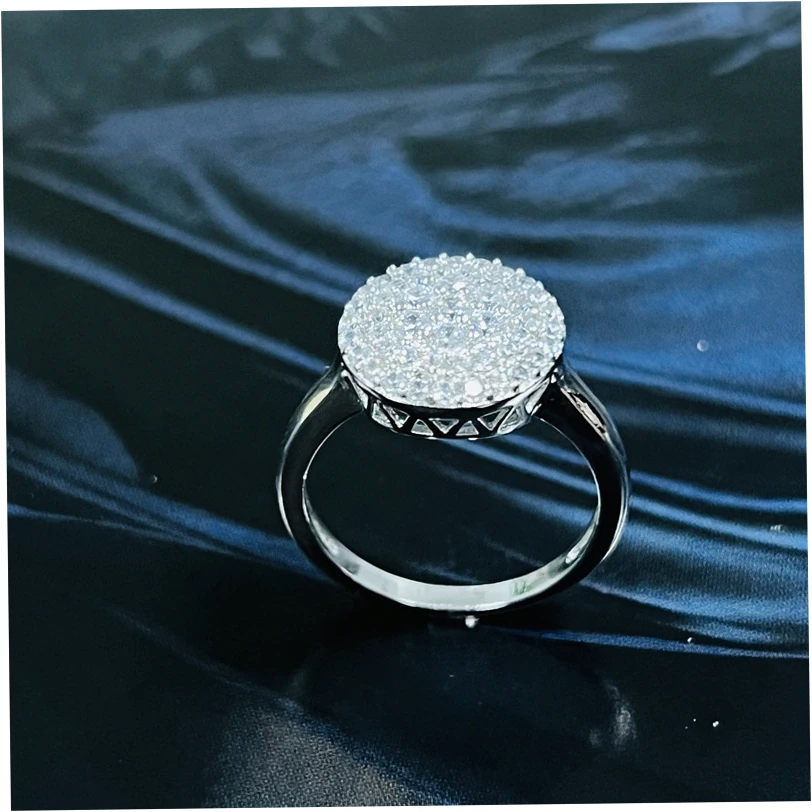

Thinking about a moissanite engagement ring or other jewelry? A big question pops up: how well does this sparkly stone deal with heat? Diamonds are famous for being tough, but people don’t talk as much about moissanite’s heat tolerance. Let’s get into moissanite’s specific heat tolerance. We’ll compare it to other gems and look at real-life situations where it counts, like during repairs or if you accidentally expose it to heat. We’ll check out the science and gemology data behind its stability. Plus, we’ll give you simple tips to keep your moissanite jewelry looking amazing forever.
Table of Content
Let’s talk about how well moissanite handles heat.
First, the science behind it: it’s all about silicon carbide.
So, moissanite isn’t made of carbon like a diamond. Its core is actually silicon carbide, or SiC. This man-made crystal is super hard—it scores a 9.25 on the Mohs scale. It also conducts heat really well.
Here’s the key point: silicon carbide is famous in industry for handling crazy high heat. We’re talking over 1500°C or 2732°F before it even starts to break down. That natural toughness means your moissanite gem can take the heat way better than any jewelry setting or repair tool you throw at it.

So, how much heat can it really take?
Now, the raw material can take a ton of heat, but for a finished gem, we have to think about it a bit differently. Experts and jewelers agree: moissanite’s heat tolerance is solid.
It can handle quick temperature swings and steady heat up to about 1000°C, which is 1832°F, and come out just fine. To give you an idea how good that is, check out how it stacks up against other jewelry materials in this table.
| Material | Rough Safe Temp Limit | What Happens If It Gets Too Hot? |
|---|---|---|
| Moissanite | 1000°C (1832°F) | Pretty much no risk in normal jewelry situations |
| Diamond | Around 700°C (1292°F) in air—it can actually burn | Over that temperature, it can oxidize or burn |
| cubic zirconia (CZ) | Around 250°C (482°F) | It might crack or turn cloudy |
| Gold (like 14k or 18k) | Varies by alloy, melts ~900°C | The metal setting will melt way before the gem has any issues |
Let’s compare how well moissanite and diamond handle heat.
First, let’s talk about how they conduct heat and deal with sudden temperature changes.
A big part of heat resistance is thermal conductivity, or how well something spreads out heat. Both stones are great at conducting heat. This means they can get rid of heat fast and handle sudden, big temperature swings without a problem.
That’s why a jeweler’s torch usually won’t crack either stone when resizing a ring, even though the heat is intense for a short time. But there’s a catch with diamonds.
Since they’re pure carbon, they can actually burn if it gets hot enough, around 700°C or more, especially with oxygen around. Moissanite, made of silicon carbide, doesn’t have that worry.

Now, what does this mean for real-life jewelry repair?
From a jeweler’s point of view, moissanite is a dream for repairs because of its heat tolerance. I’ve talked to jewelers who always say you don’t have to stress about it.
A GIA-certified master jeweler told me, When we resize a moissanite ring, we can leave the stone right in place. It handles heat better than a lot of other gemstones.
The real worry is always the metal prongs melting, not the moissanite itself getting damaged. So, from their hands-on experience, moissanite’s heat tolerance is totally fine for normal soldering and laser welding work.
But when could heat actually be a risk? Let’s look at the limits and what to watch out for.

Here’s what you really need to be careful about.
The biggest danger from high heat isn’t to the moissanite—it’s to the setting holding it. The metal prongs can get weak or even melt, which might make the stone loose or pop right out.
Also, if you somehow exposed it to crazy, long-lasting heat—way more than any normal accident—the metal around the stone might change color. The bottom line is, even though moissanite is tough, you should never purposely put any jewelry in a flame or near serious industrial heat.

What about everyday accidents?
Think about common stuff at home. What if you forget to take your moissanite ring off while using the oven or a hair dryer? Almost always, absolutely nothing happens.
The quick heat from things like that isn’t even close to hot enough to bother the silicon carbide crystal in moissanite. Thanks to its high heat tolerance, hot water, steam, or briefly touching a hot pan won’t affect it at all.
This toughness is a huge reason why it’s such a great choice for everyday wear as a diamond alternative.
Caring for Your Moissanite Jewelry
Safe Cleaning and Maintenance
You can use ultrasonic cleaners or steamers on your moissanite. That’s because it’s got a really tough structure. These tools use heat and vibrations to get rid of dirt, and moissanite handles that just fine.
That’s a big plus compared to softer stones like emeralds or opals. For a simple, safe clean at home, just grab a soft brush and some warm, soapy water. And because moissanite is so hard, it hardly ever scratches. So even after years of cleaning, it keeps that amazing sparkle.

Professional Servicing Advice
Here’s a tip: always tell your jeweler your jewelry has moissanite in it. A good jeweler can usually spot it, but it’s best to be upfront. The main thing is to make sure whoever’s working on it knows what moissanite is like.
Now, they won’t need special steps just for the stone’s heat tolerance—standard practice covers that. But telling them helps them value your piece properly. Then they can give you the best advice on fixing prongs or settings, making sure the metal stays strong.
| Do | Don’t |
|---|---|
| Go ahead and use ultrasonic or steam cleaners. | Don’t blast it with a torch or put it in crazy high heat on purpose. |
| A soft brush with warm, soapy water works great. | Take it off if you’re doing something like welding or blacksmithing. |
| When you need repairs, let your jeweler know it’s moissanite. | Don’t just assume the metal setting can handle as much heat as the stone. |
| Store it by itself so it doesn’t scratch your other jewelry. | Try to avoid harsh stuff like chlorine if you don’t need to. |
Let’s clear up some common myths about how gemstones handle heat.
Moissanite vs. Cubic Zirconia
Here’s a key point people often get wrong: many think moissanite’s durability is the same as cubic zirconia’s, but that’s a myth. CZ is famous for being sensitive to heat.
Sudden temperature changes, like hot water, can make it cloudy or even cause it to crack. Moissanite is made of silicon carbide, which is a totally different material and makes it way tougher.
The table below shows just how different their properties are. That’s why moissanite is seen as a stone for lifelong jewelry, but CZ isn’t.
| Property | Moissanite | Cubic Zirconia (CZ) |
|---|---|---|
| Hardness (Mohs) | 9.25 | 8-8.5 |
| Heat Tolerance | Very High (~1000°C) | Low (~250°C) |
| Thermal Shock Resistance | Excellent | Poor |
| Suitability for Daily Wear | Excellent, permanent | Good, but may degrade |
Long-Term Color and Clarity Stability
Now, let’s tackle the worry about color. Some folks are concerned heat could make moissanite turn yellow or cloudy down the road. But after decades on the market and lots of study.
we know high-quality moissanite keeps its color and clarity perfectly stable, even in tough, everyday wear. That’s because its color comes from how the crystal grows.
It’s not a coating or a treatment that heat can mess with. This lasting stability is a huge part of why it’s such a great alternative to a diamond.
So, to sum it up, moissanite has amazing heat tolerance thanks to its silicon carbide makeup. It easily handles everyday heat, cleaning, and even jewelry repairs. In some situations, like around oxygen, it actually outperforms diamond.
And it’s miles better than other look-alikes, like CZ. Sure, the metal setting is still the weak spot if things get really hot. But the moissanite stone itself is a super durable and heat-resistant choice.
Want to see this toughness for yourself? Share your moissanite stories with us! Or, check out our full guide on moissanite care and comparisons to learn how to keep your stone shining bright forever.

Got questions about how much heat moissanite can handle? Here are some answers.
Wondering if you can wear your moissanite ring in a hot tub or sauna?
Yes, it’s perfectly safe to wear moissanite in a hot tub or sauna. The heat and moisture won’t harm the silicon carbide gemstone at all. Just watch out for the metal setting. Harsh chemicals in some hot tubs can damage certain metals over time.

Can washing your hands with hot water crack moissanite?
No way! Moissanite handles sudden temperature changes really well. So, hot water from washing your hands won’t crack it or cause any damage. That’s a big plus compared to gems like opal or emerald, which are more sensitive to heat, and even better than cubic zirconia.
Is using an ultrasonic cleaner on moissanite safe?
Yes, it’s usually very safe. Because moissanite is so hard and tough, it can easily handle the vibrations and heat from ultrasonic cleaners. But, it’s a good idea to check the setting first. If the prongs are loose, the vibrations might shake the stone free.
How much heat can moissanite take during jewelry repairs?
Moissanite can handle crazy high heat—up to about 1000°C (1832°F). That’s way hotter than what it takes to melt the solder or metal in your jewelry. So, for common fixes like resizing.
jewelers don’t have to take the moissanite out. The metal setting will give out long before the gemstone even feels the heat.